Have you heard of Jorvik? Danelaw? If you haven’t heard of Jorvik or Danelaw, then possibly you’ve heard of York. In 866 CE, the Vikings capture an Anglo-Saxon city named Eoforwic. There is a tongue-twister! As the Vikings speak an old Norse language, the word Eoforwic gradually changes to “York.” Nice!
Simply an interesting tidbit? No. I have an interest in this northern area. With a name like Lindquist, my paternal ancestors came from Smäland, Sweden. Were they some who pillaged northern England? Whether they were or not, what did their fellow Vikings do? There are more than one stereotype about the Vikings!
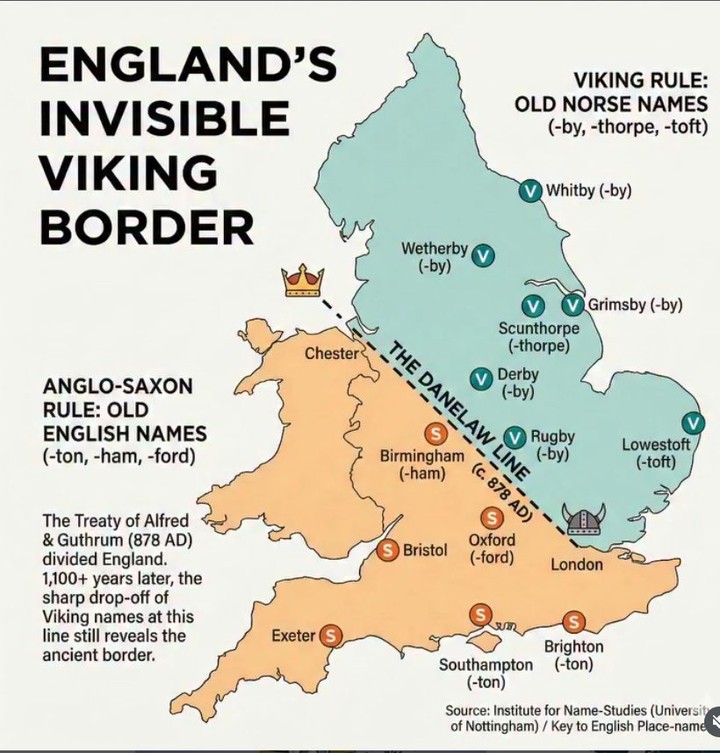
Back to the term “Danelaw.” The term is even more complicated. After 866 CE, the Anglo-Saxons must live with the Danish people and the Vikings who are now in northern England. By the 11th century, the Anglo-Saxons used the Old English term “Dena lagu,” which translates directly to “law of the Danes.” In order to assure some sense of order, the Anglo-Saxons, in exchange to the Vikings pledging loyalty to the Anglo-Saxon king, allow the Vikings to keep their laws and traditions.
This result is a division of the land. For approximately two centuries, the Vikings, the Danes, maintain the north and east of England. The Anglo-Saxons the land in the south and west. Eventually, Danelaw disappears with the Anglo-Saxon King Harold II’s defeat of the Danelaw rulers, and then his defeat by William the Conqueror.
Despite “Danelaw territory” ceasing to exist, the legacy of the Vikings remains. Some everyday English words owe their origin to Old Norse words. Sky, knife, husband, egg, and pronouns such as they, them, and their. Interesting! Also, place names also show Old Norse influence. Towns and villages ending in -by (meaning farm or village) such as Grimsby or Whitby; towns and villages ending in, -thorpe (meaning secondary settlement) such as Mablethorpe or Scunthorpe; and towns and villages ending in -thwaite (meaning a clearing) such as Braithwaite in the Lake District or Thwaite in the Yorkshire Dales.
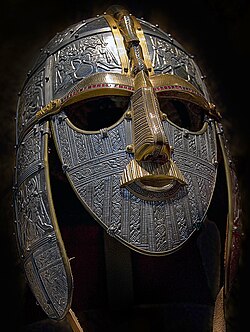
My stereotypes are certainly challenged. In going to the Jorvik Center and other regional museums, I have several stereotypes challenged. First, while you wouldn’t want to invite the Vikings to a dinner party, they are more than the marauding, bloodthirsty, brutal stereotypes. They are also domestic settlers. They live in villages; they farm the land; they fish the seas. In other words, much of their time is spent raising kids and families.
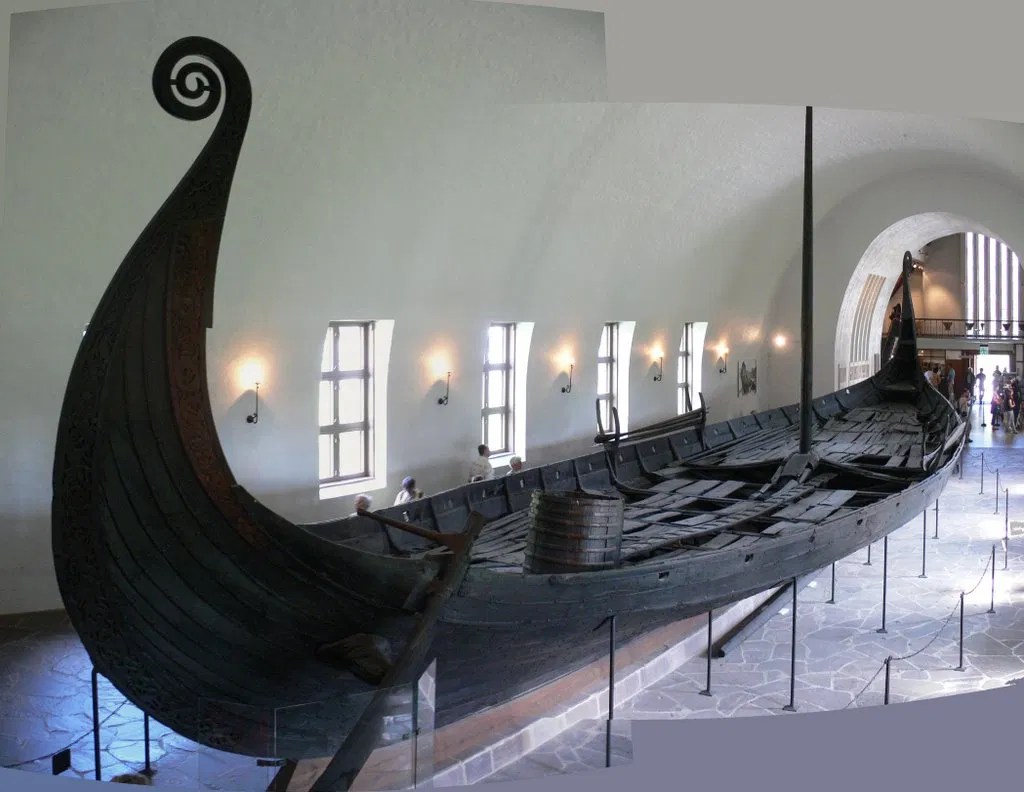
Second, while they don’t rival a Thomas Edison or Henry Ford, they are culturally advanced. How did they travel so far in their longboats? Their boats aren’t haphazardly thrown together. Instead, they know how to build their longboats so that they would bend with the ocean swells, not fall apart. Without a magnetic compass, they still know how to read the stars and the currents of the ocean to help them navigate. Primitive? No!
Finally, besides their rich oral tradition of the Norse gods of mythology, the Vikings develop the “ting.” This word refers to the “regional legislative assemblies where free men gathered to debate laws, settle disputes, and elect chieftains.” (thank you, Wikipedia). While not completely “democratic,” the Vikings know how to socially organize and rule themselves.
Back to my ancestry. My paternal grandfather was born in Smäland, Sweden. Although he died while I am an infant, my father felt connections with Sweden. Every Christmas Eve, my paternal grandmother invited distant friends and relatives with quite a noticeable accent for dinner and piano singing. I wish that I could talk with my grandparents, or even my uncle Everett and Aunt Bea, who were faithful members of Grace Evangelical Lutheran Church, not the Swedish Evangelical Lutheran Church since there was no Swedish speaking church in Springfield.
A name like Lindquist, and with my ancestors from Smäland, Sweden, means that I have some Viking DNA. Distinct from central Sweden, Smäland in southern Sweden touches the coast of the Baltic Sea. Some of my Smäland ancestors probably participated in the Viking expeditions. However, according to Swedish historians, these Smäland Vikings, rather than rowing to Britain or France, these Smäland Viking ancestors probably traveled east and south into Russia, Constantinople, and possibly north Africa. Maybe that is where I get my love for travel!
I love England’s wonderful layers of history. I love the Viking inclusion in English history. I love how my own story intersects with some of those layers!

