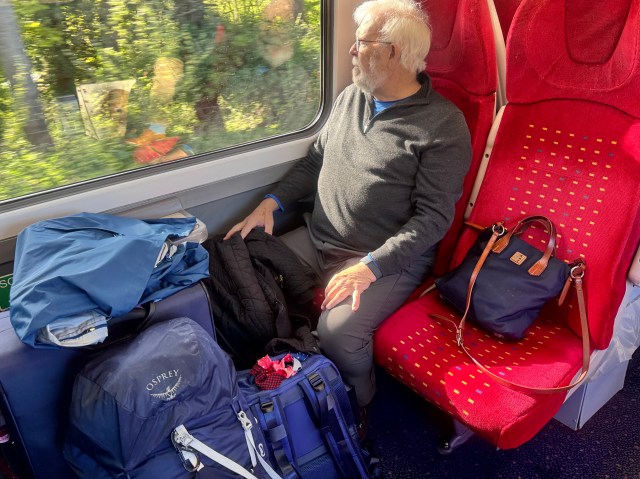
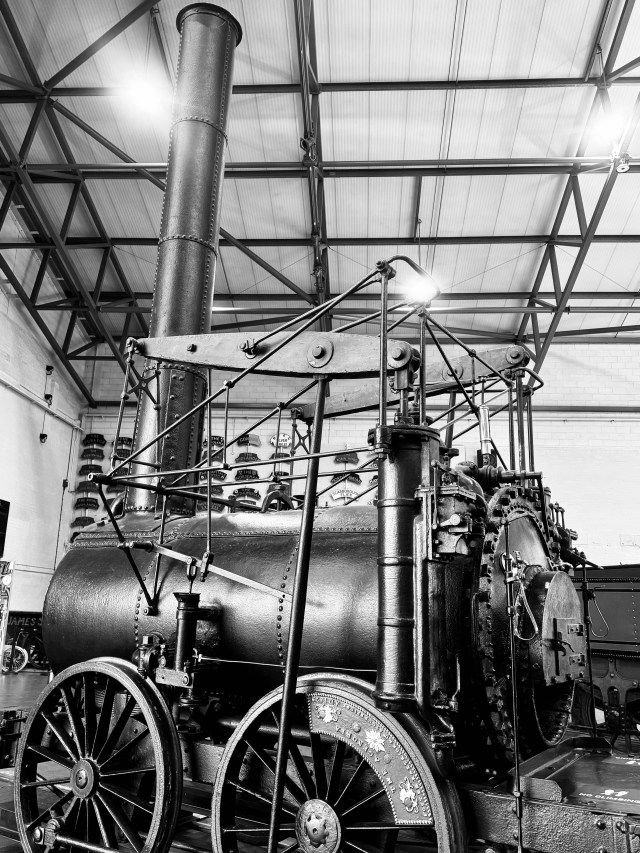
After visiting Fountain Abbey and Studley Gardens (yes, the gardens are named Studley), Mary and I return to York. Mary heads to our hotel; I head to the York Railroad Museum. Given the historical importance, and the almost cult-like importance for some train fanatics, I have to visit the museum. Railroads improved mobility. Railroads changed the lives of everyone.
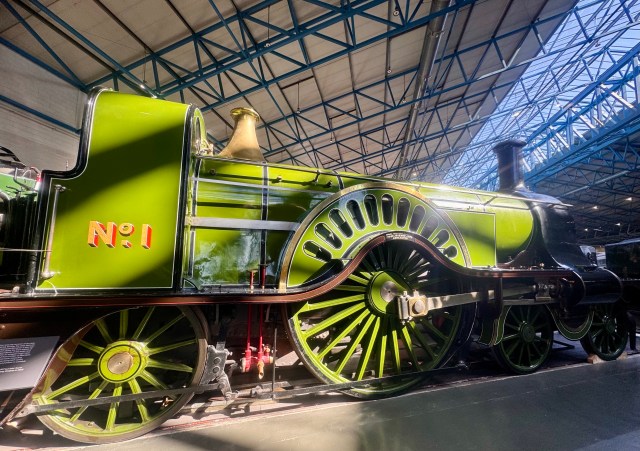
I’m not disappointed. It is the largest railway museum in Great Britain with almost 100 examples of “rolling stock.”
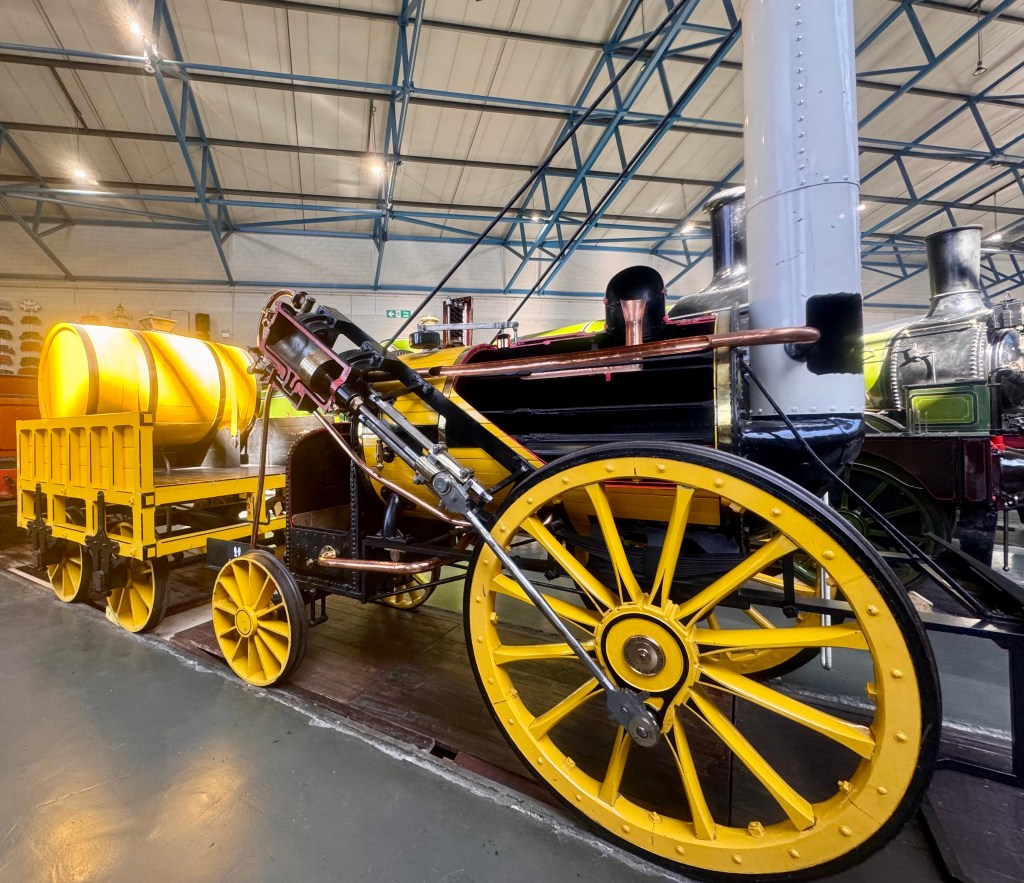
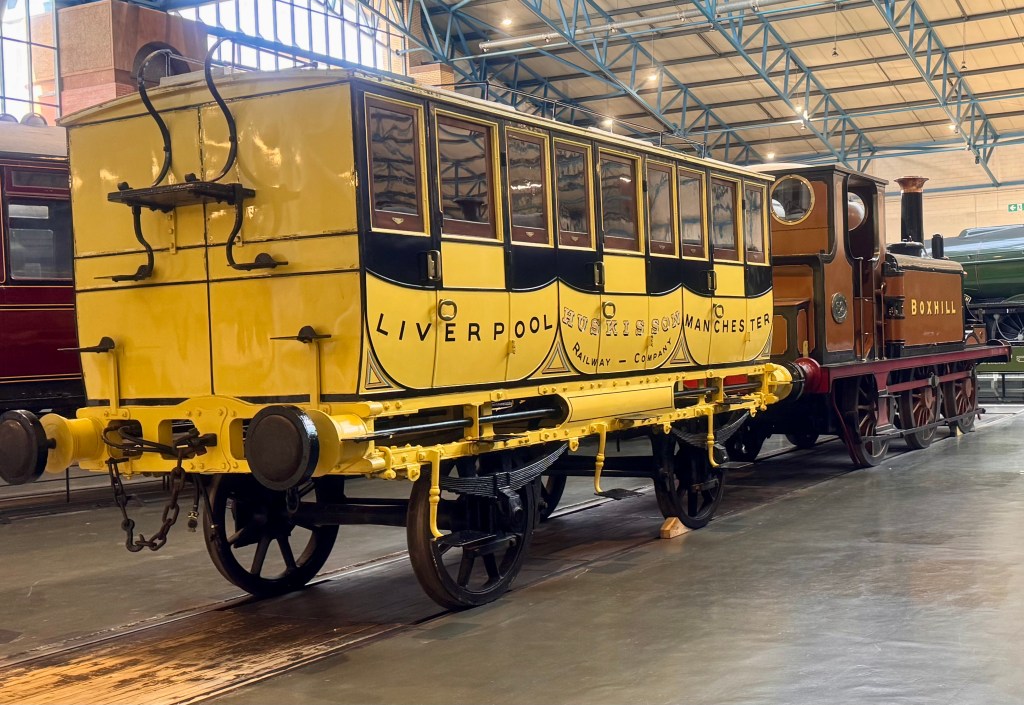
I see the Rocket. Even I know that the earliest successful train is George and Robert Stephenson’s The Rocket; however, I don’t know some of the details surrounding the Rocket.
Liverpool and Manchester are key cities for the beginning of the Industrial Revolution. While there is a rail line built between Liverpool and Manchester, there is no engine that successfully covers the approximate 30 miles. As a result, the owners hold the Rainhill Trials, offering a £500 prize to the engine that shows best. By September 1829, the two Stephenson brothers design and build the steam engine, not the first steam engine, so that they could compete with three other entries. The Rocket wins the trial competition by being the only one to complete the entire course! So much for the competition!
Unfortunately, on September 15th 1830 the first day of its operation, and in front of the Prime Minister and several Members of Parliament, the Rocket also becomes the first train engine to strike and kill a person. William Huskisson, a Member of Parliament from Liverpool, is killed.
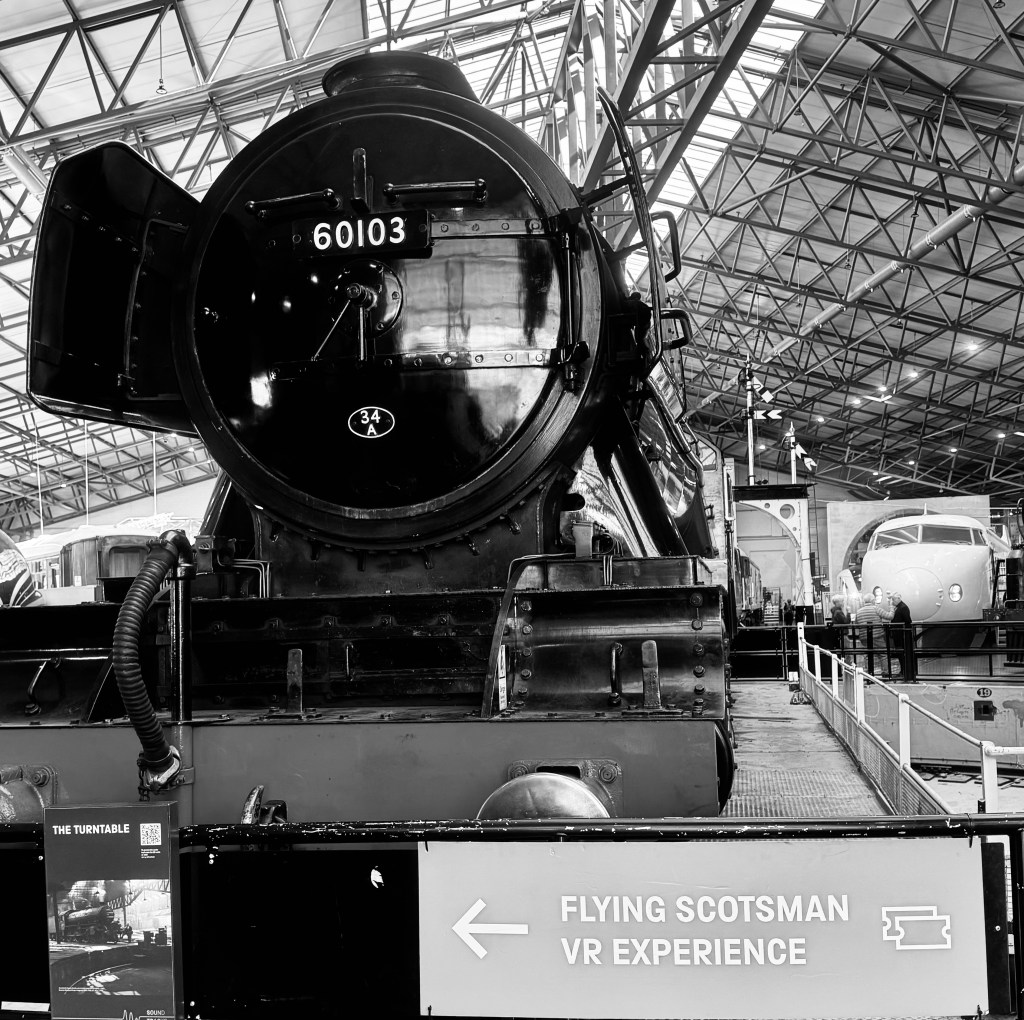
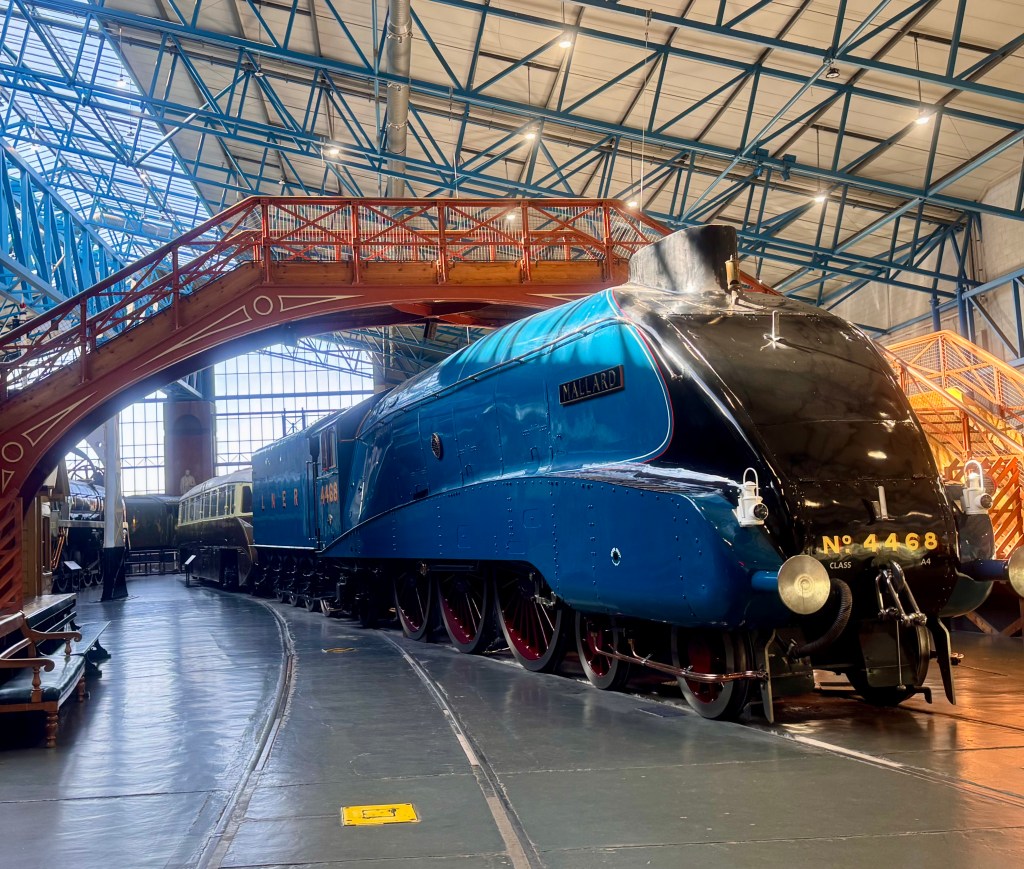
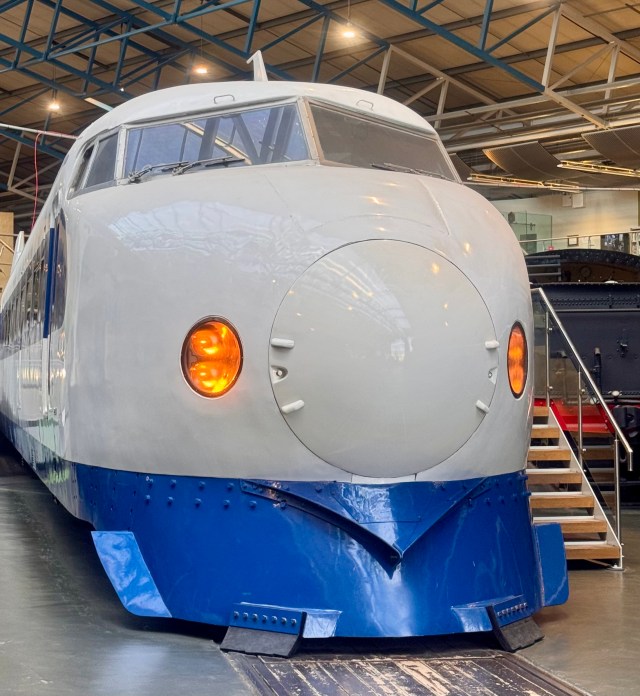
There are other engines. There is the Flying Scotsman. Built in 1923 for the London to Edinburgh run, the steam engine becomes the first engine to officially reach 100 mph (1934). There is the blue painted steam locomotive Mallard. In 1938 the Mallard sets the world speed record at 126 mph. There are engines used in China; engines used in India. A Japanese railroad company even donates a Shinkansen “Bullet Train.” Nice!
Finally, there are “Palaces on Wheels.” A number of royal coaches, from Queen Victoria to Queen Elizabeth, on display. To be honest, I’m not sure why these coaches are called “Palaces on Wheels”, but then I’m not sure if any railway coach could be called a “palace.”
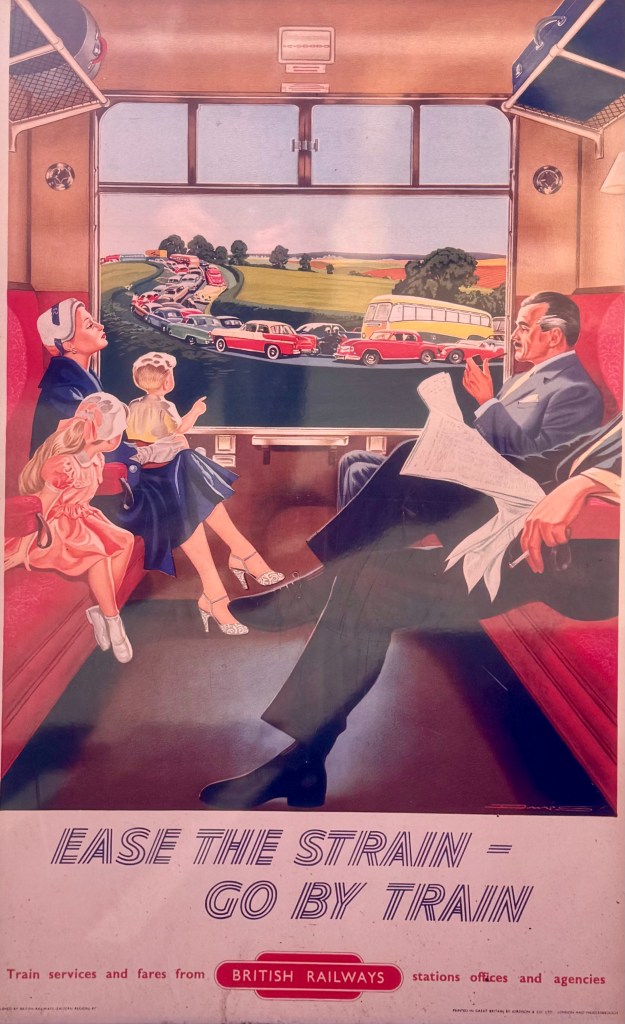
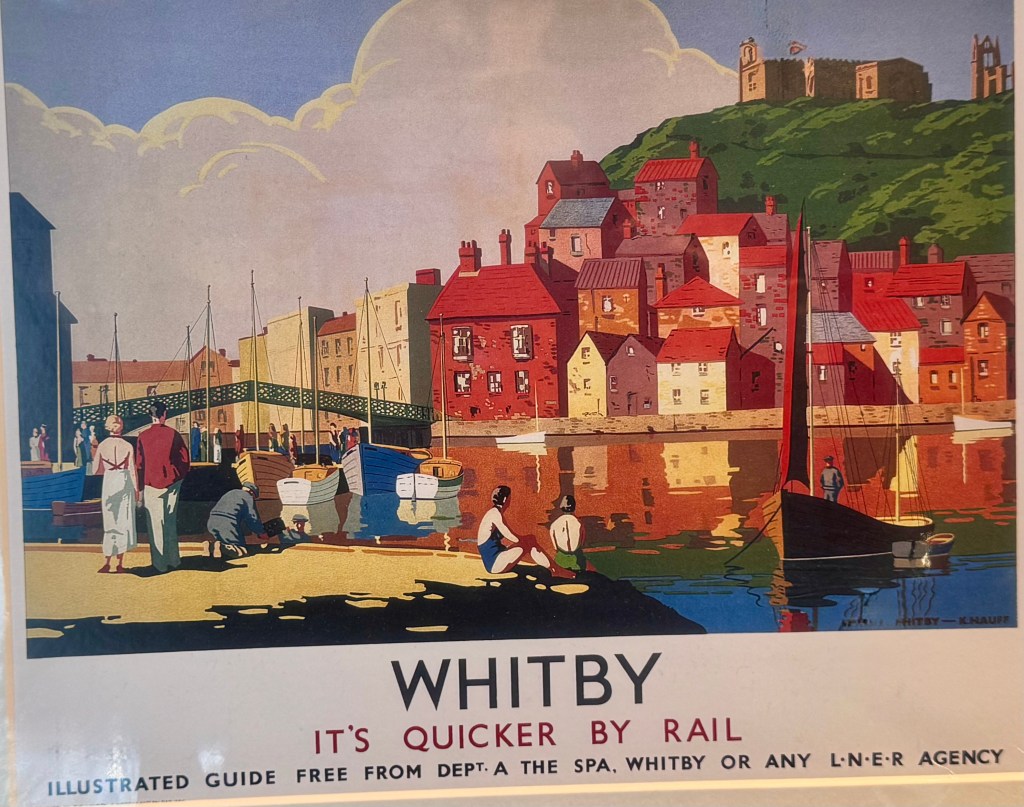
Our mobility has never been the same after the introduction and spread of the railways. In the 1840’s, people traveling from Liverpool to London expect days of riding a horse-drawn carriage; or, they could take a train journey of 4 ½ hours! Even the calculation of time has changed. Because of trains’ timetables, the calculating of time becomes standardized. After the railways adopts Greenwich Mean Time in 1847, almost the entire country adopts this “Railway Time” by 1855! The trains even allowed for mass tourism. Working class people taking an August weeks’ vacation help fuel the growth of the seaside coastal resorts. Prior to the railroad, those resorts have only been for the aristocrats and the wealthy.
Mobility affects products besides people. Fish from the coast could now be transported to inland cities or the vast London market changing the nutrition and eating habits of millions. Obviously, the trains transport the coal, iron, cotton, and other finished products providing the necessary materials for an exploding industrial revolution.
I love walking; I love riding the train. The two enjoyments are not mutually exclusive. Both involve mobility, movement. Both involve a means of getting from one location to another location. What a joy!