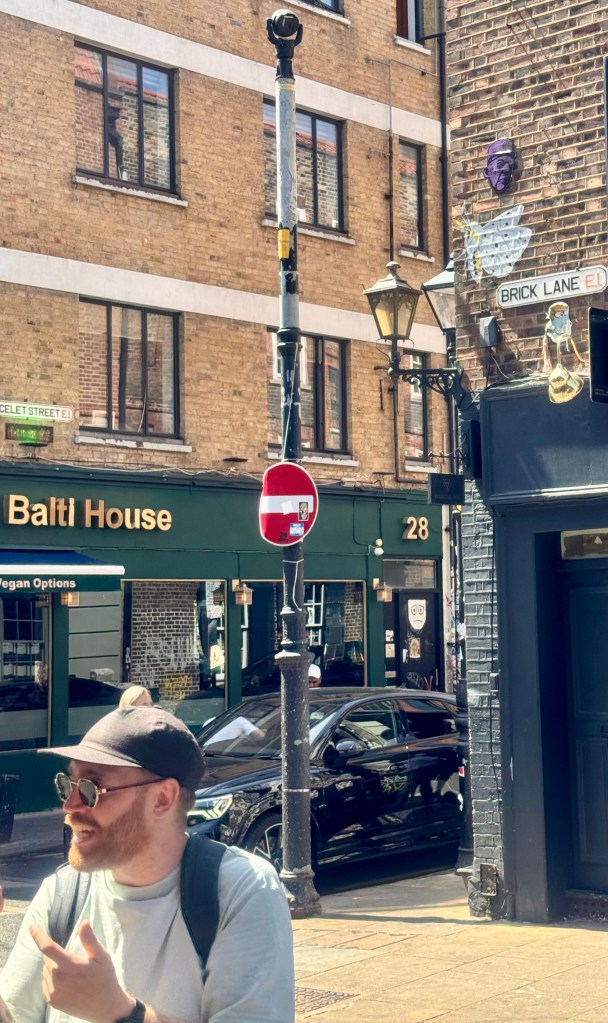
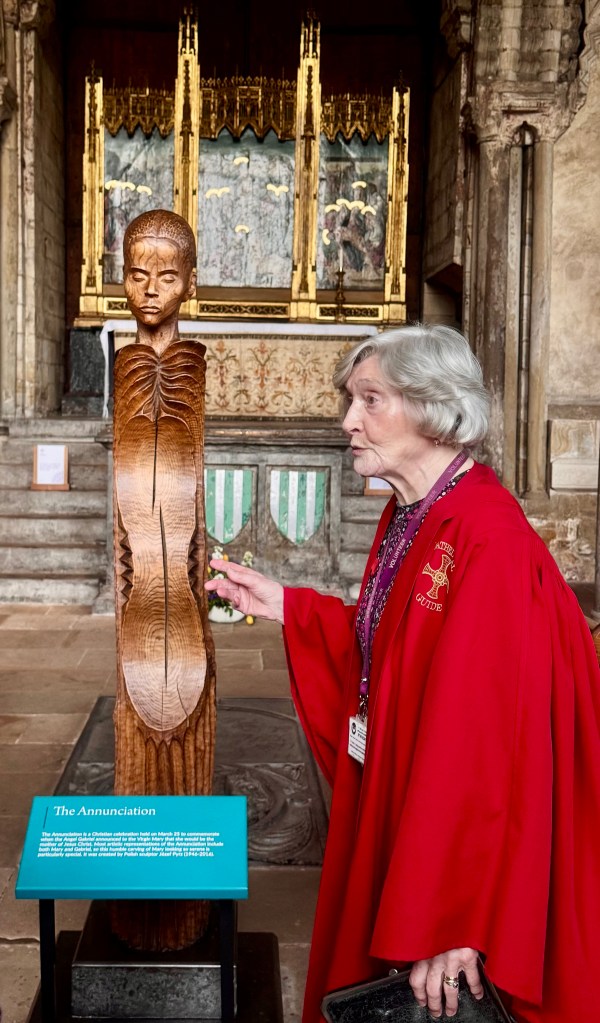
I wonder what tour guides think of us, their tour participants. While a legitimate question, I’m too committed to their value for us to ask that question. Here are some of my experiences with tour guides.
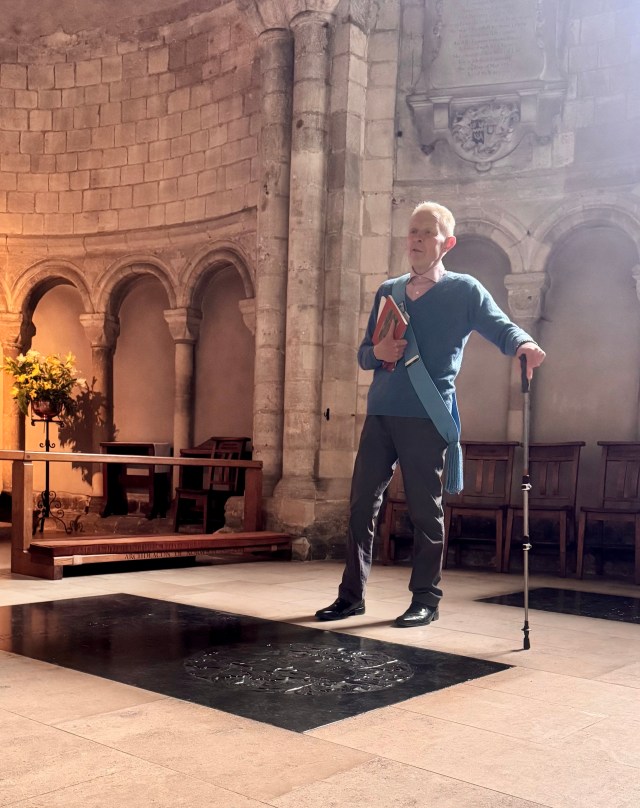
Clive, at Norwich Cathedral, wants to be perfectly clear. “The purpose of this magnificent building is to glorify God.” He then points to bosses in the ceiling a hundred feet above us, bosses are ornamental features which occur at the intersection of ceilings or roofs which act like capstones. “Can you see those bosses?” We all shake our head no. “Well, the artists knew that nobody would see them; however, he still wanted his work to glorify God.” Sometimes the guides can quickly point to something easily overlooked or not even seen. Sometimes we can draw the conclusion as to its significance. Sometimes we need help.
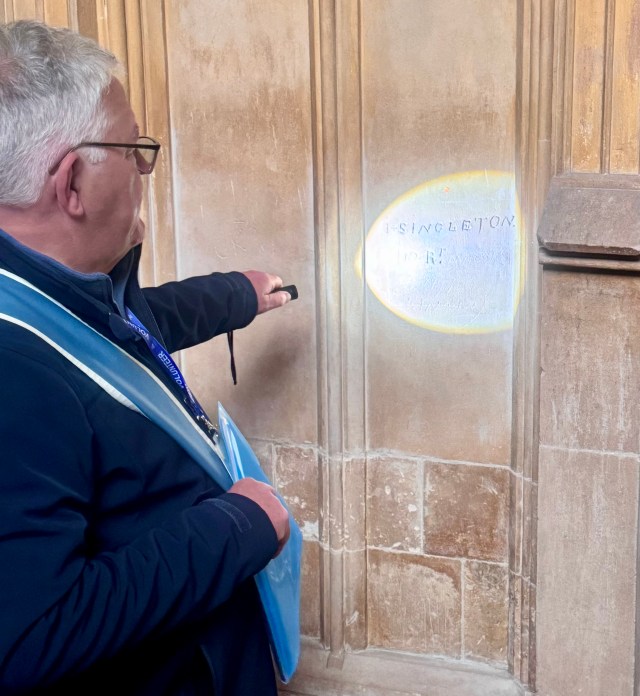
Nigel, an enthusiastic guide at Lincoln Cathedral, gives us a warning. “Please come back and spend more time at our cathedral. But a warning. Don’t come on Wednesdays. The organ gets tuned on Wednesdays. The tuner plays one note for a long, long time. It is odious!” A bit of honesty! Nigel also advises us to always ask two questions. “When you visit a cathedral always ask two questions. When was there a fire? When did the spire collapse?” As he proceeds to explain, at those tragic but almost guaranteed occurrences, the repair of the cathedral usually results in a change in architectural style. Norman architecture adds some Early English architecture; Early English adds some Gothic architecture.
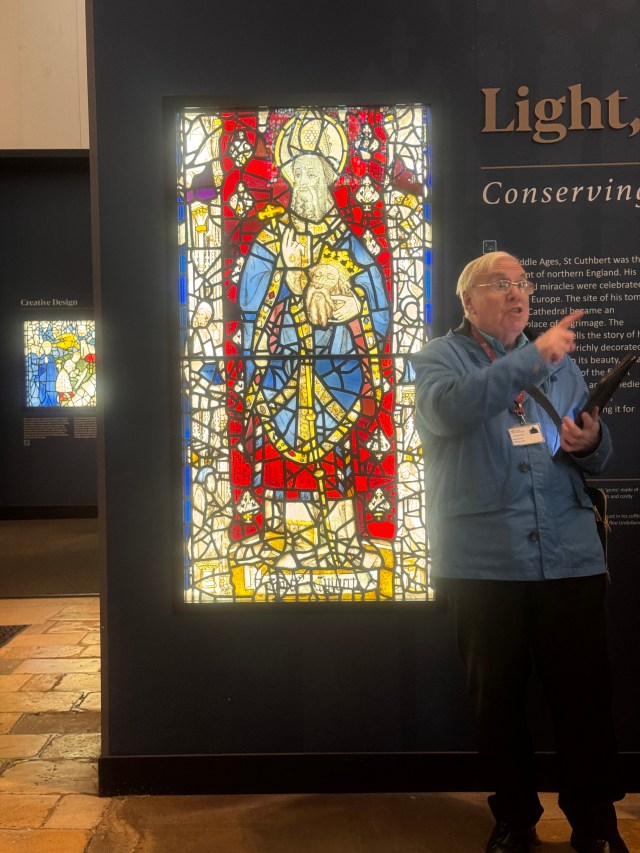
Gilbert, the proud, cross-eyed guide at York Minster, knows to answer our unasked question. Toward the end of the tour, after showing us one beautiful stain glass window after another, he says: “You are probably wondering how this stain glass has survived the centuries, especially during the Civil War? Well, it wouldn’t be here unless a wealthy, local Puritan family, the Fairfax’s, stopped the Puritan soldiers from using the windows as target practice. They were antiquarians and knew the irreplaceable value of these windows.” Immediately, I and others wish that other Puritans had stopped their soldiers from shooting out the stain glass windows of other cathedrals!
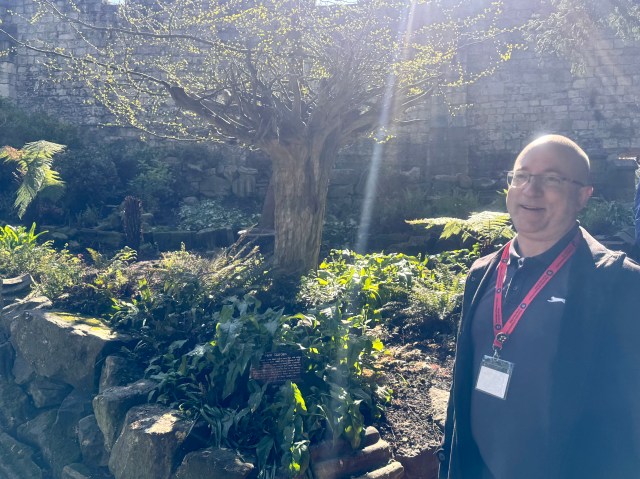
Our walking tour guides will also point out those stray features of a city that we would normally miss walking by ourselves. Grant, our York walking guide, points out a “stumpy.” Apparently, Victorian gardeners would invert a dead tree stump. They’d cut a section of the tree, dig it up, and stick the trunk in the ground. The roots were then used to hold moss, vines, or any number of flowers and plants. I would have walked right by the rather odd looking stump!
Later, he has us on the city wall admiring the Minster. “Look at that building right below us. See those blocks of stone. This is a shop devoted to teaching young people the craftsmanship of stone masonry and stain glass window restoration.” Obviously, if these magnificent cathedrals are going to be preserved, men and women will have to possess the skills to do the work. Thinking ahead!
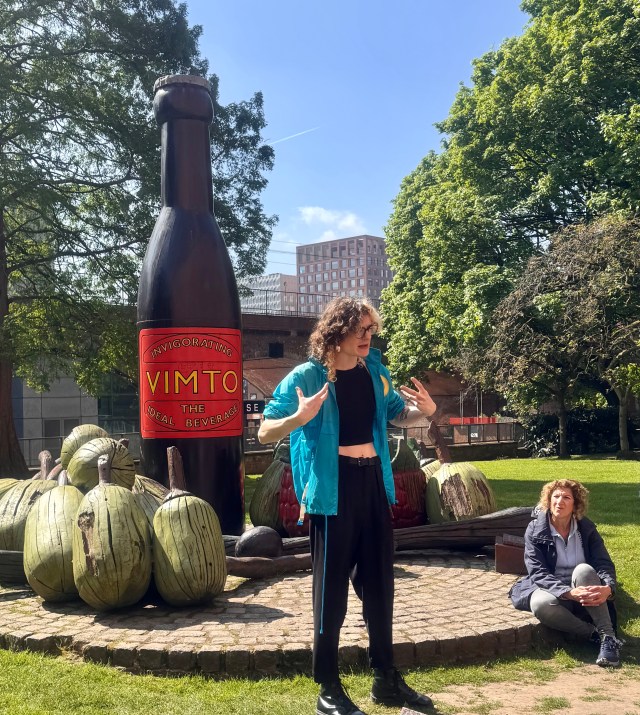
Danny, my Manchester walking guide, takes us to a statue of Vitmo, a healthy, non-alcoholic, vegetable-based drink. “Why in a city whose citizens and university faculty have won 26 Nobel Prizes do we have a statue of Vitmo, a health drink?” He continues, “The city and university allowed the students to pick the statue to be displayed. They picked this health drink!” Minutes later, he points to buildings with ornate balconies and towers. “What are those? See that balcony fit for the Pope? It is really the front of a warehouse. Manchester’s Victorian merchants wanted to make a statement even with their warehouses. We have money!”
When I, we, travel, we can read a guidebook. With the guidebook, we can have our own conjectures confirmed. However, with a guide on a walking tour, there is so much more. The slowness of the walk allows one to absorb more of the surroundings. A slow walk combined with descriptions and explanations allows me to sort out some of that which I see.
A good tour guide also talks with the participants. He or she discovers our own interests. When I mentioned to Nigel that I like cathedral graffiti, he frequently stops to point out the graffiti, even taking me to some after the official tour ended. Thoughtful! A good tour guide also invites questions about themselves. Since a traveler only has so many interactions with “locals,” the chance to ask the tour guide questions can add to our understanding not only the tour guide but also the city’s people. “How did you get interested in offering tours? “I love history.” “I want to give back to my city by sharing my love for it.” “I work insides at the computer several days a week. I love getting outside and walking the town!”
A slow walking tour allows one to talk with the other participants. I’ve heard suggestions of restaurants to try, museums to visit, interesting parts of a city to photograph.
We are fortunate to travel. We are even more fortunate if part of that travel includes a walking tour of a cathedral, a museum, a city’s streets, with an informative and interesting guide.