
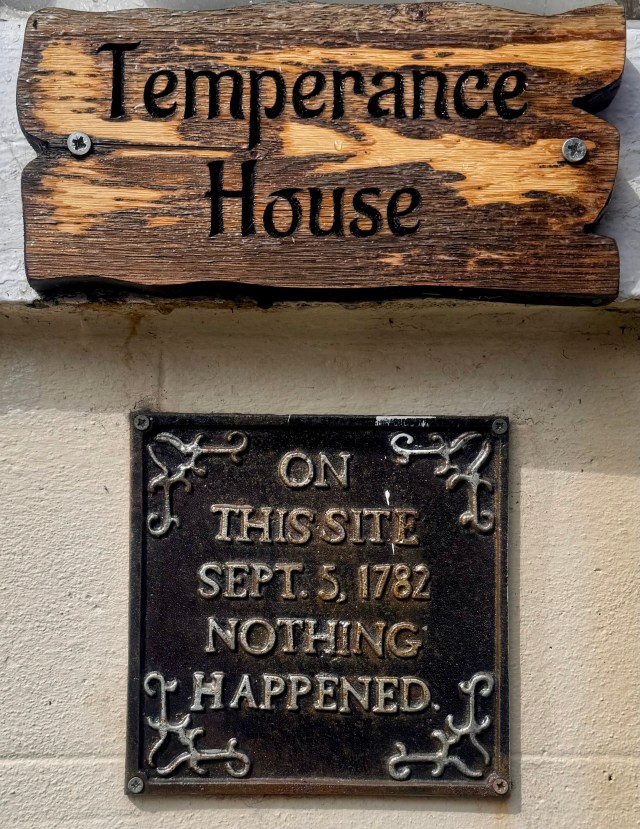
The English language can be fascinating. Anybody who travels to England will immediately notice something about the accents, the selection and use of words, the almost universal “politeness” of the English people. In addition to the conversations included in previous posts, I’m writing a separate post for “words” spoken and overheard.
In traveling through many English counties, I’ve found the most difficult accents to be those from Cornwall and those from Liverpool. In Liverpool, Charles and Christina try to order tea. “We couldn’t understand what the waiter said, or even if he was asking us a question.” The next morning the taxi driver confirmed the difficulty of the Liverpool accent. On the South West Coast Path, one English walker tells me, “Don’t feel bad, I can’t understand half of what I hear in Liverpool.”
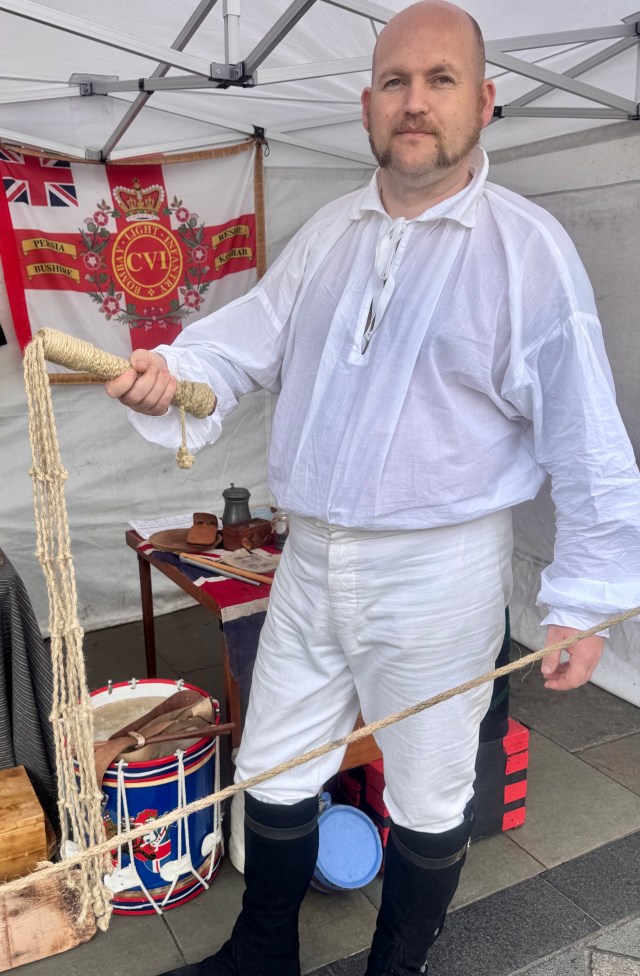
Here are some of the interesting conversations that I’ve had. In Durham, I talk with some 18th century reenactors. One claims that the expression “let the cat out of the bag” is derived from the Royal Navy’s punishments. If a sailor was to be punished, another sailor was given a bag which contained the cat whip. Often the one using the whip was one of youngest mates. If he failed to whip the sailor severely enough, then he’d be punished. Tough discipline! Also, the reenactor says that the expression “no skin off your back” also refers to the Royal Navy’s punishments which were less severe. While being whipped by cat-tails would be so serious that the skin might flake off one’s back, other sailors might undergo less severe punishments.
Not all conversations are “polite.” In Norwich, Mary and I ate at a Turkish restaurant which provides a wonderful lamb meal. Not everybody is pleased though. We overhear two gruff men say to the owner “Yesterday, you didn’t give us many chips. How about a lot more today?” When served a pint, one says “You call this a pint? It looks like water! What are you serving here?” Finally, “Where’s my order of bread and tahini? Have you forgotten me?” Other dinner guests notice the language also. When we leave the restaurant, Mary and I feel as though we have witnessed two Mafia “collectors” who were being “toughs” with the restaurant owner.
I’ve witnessed only one other rude set of words during all my months of walking and traveling in England. I’m sitting at a table a few feet from Durham’s Kingslodge Inn bar. A fellow at the bar is obviously inebriated. He addresses women as they walk by; he puts his arm around another fellow who comes to order his drink and food. Eventually, his friend joins him and gently propels him to an outside table. An apparent regular, this friend returns and apologizes to the “formidable” bar maid. When she says to him, “Thanks for apologizing. But I’m not serving your friend another drink”, he nods acceptingly and rejoins his friend outside. Obviously, this regular tells his friend that he won’t be served any more pints. Within a minute, the inebriated fellow reenters the pub and shouts loud enough for everybody to hear “Well, I hope that you all have a shitty day.” Folks shake their heads. Folks stare at him. What he doesn’t realize is that in the far tables of the pub, fifteen folks are having an after-funeral meal. Their day probably isn’t going the best already! What a jerk!
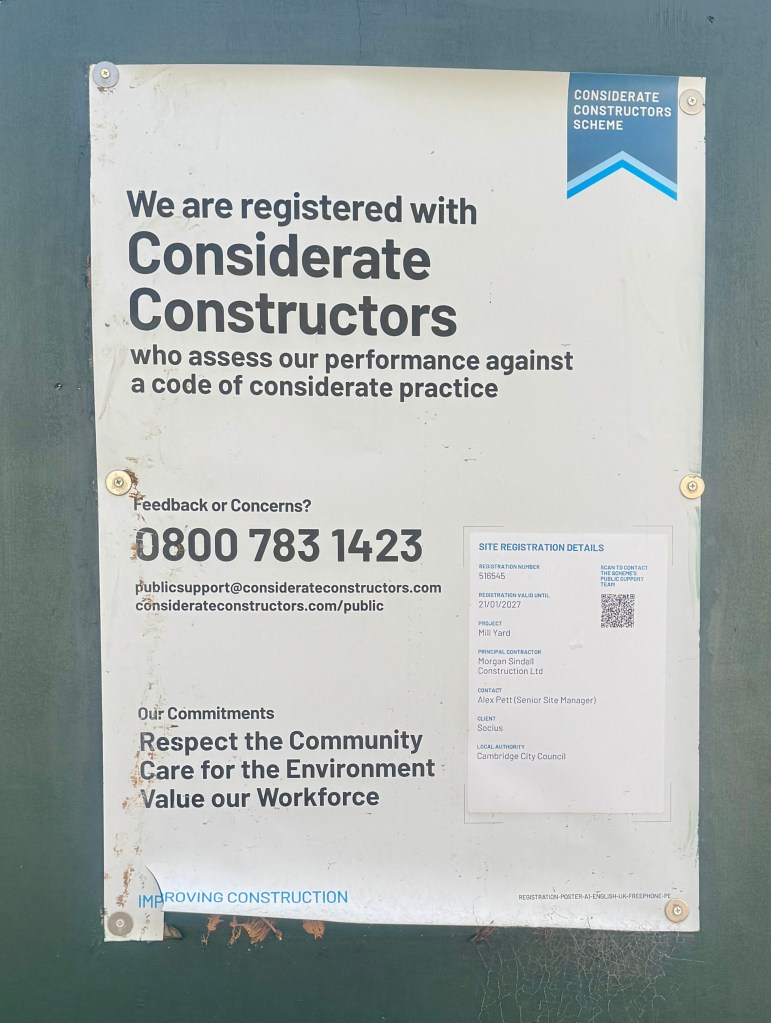
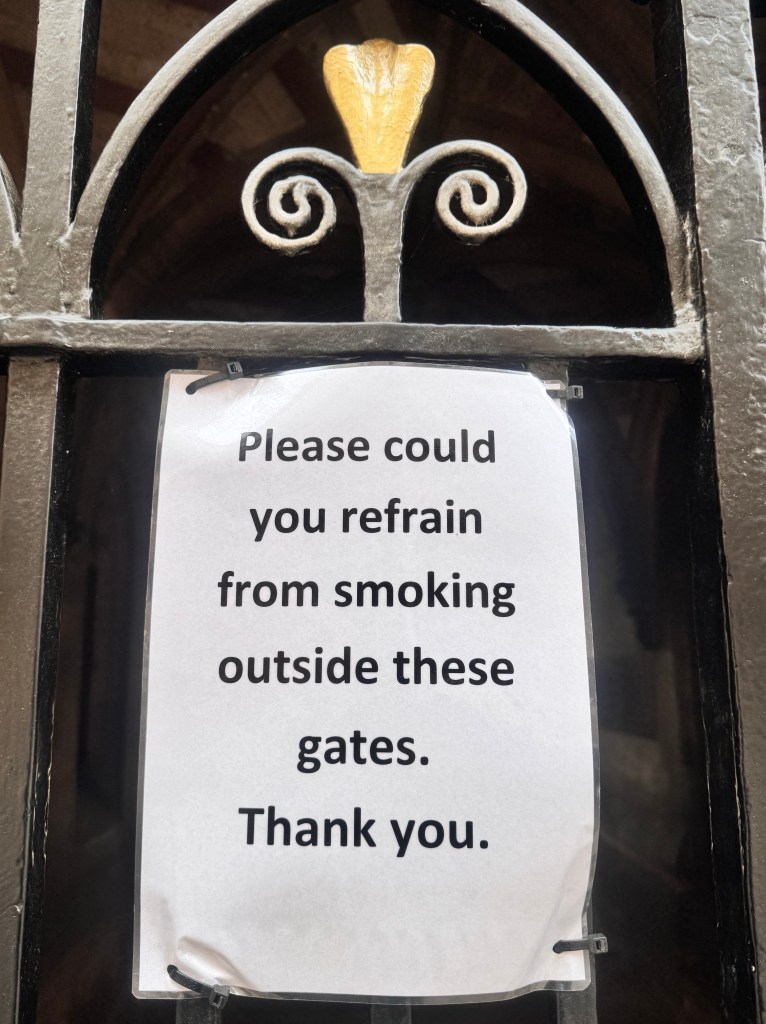
But, I also see signs and posters such as those below. “Considerate Constructors.” Really! The sign does not read “Smoking Prohibited.” Instead, “Please could you refrain from smoking….” A very different choice of words.
Sometimes the English are so, so polite. In asking the directions for my next night’s lodging, the owner states “I could tell you something as though I knew, but I’d be lying.” Or, when we asked our York walking guide about a garden exhibit, he said “The exhibit is new. I could walk over and read the sign, come back and tell you. But that would seem odd.”
I try to keep my ears open. So many interesting spoken and overheard conversations.

